Use Goose with Your AI Subscription

· 3 min read
Michael Neale
Principal Engineer

You can use your subscriptions for codex, claude and gemini now with goose, thanks to ACP! (Agent Client Protocol). Codex is also special in that you can login directly to chatgpt - nothing else needs to be installed.

Gemini natively supports ACP, so it now works with a gemini acp provider in goose. At the time of writing, claude requires just one utility installed just once.

WebMCP for Beginners

· 9 min read
Rizel Scarlett
Staff Developer Advocate

blog cover

Raise your hand if you thought WebMCP was just an MCP server. Guilty as charged. I did too. It turns out it's a W3C standard that uses similar concepts to MCP. Here's what it actually is.

Order Lunch Without Leaving Your AI Agent

· 9 min read
Debbie O'Brien
Staff Developer Advocate

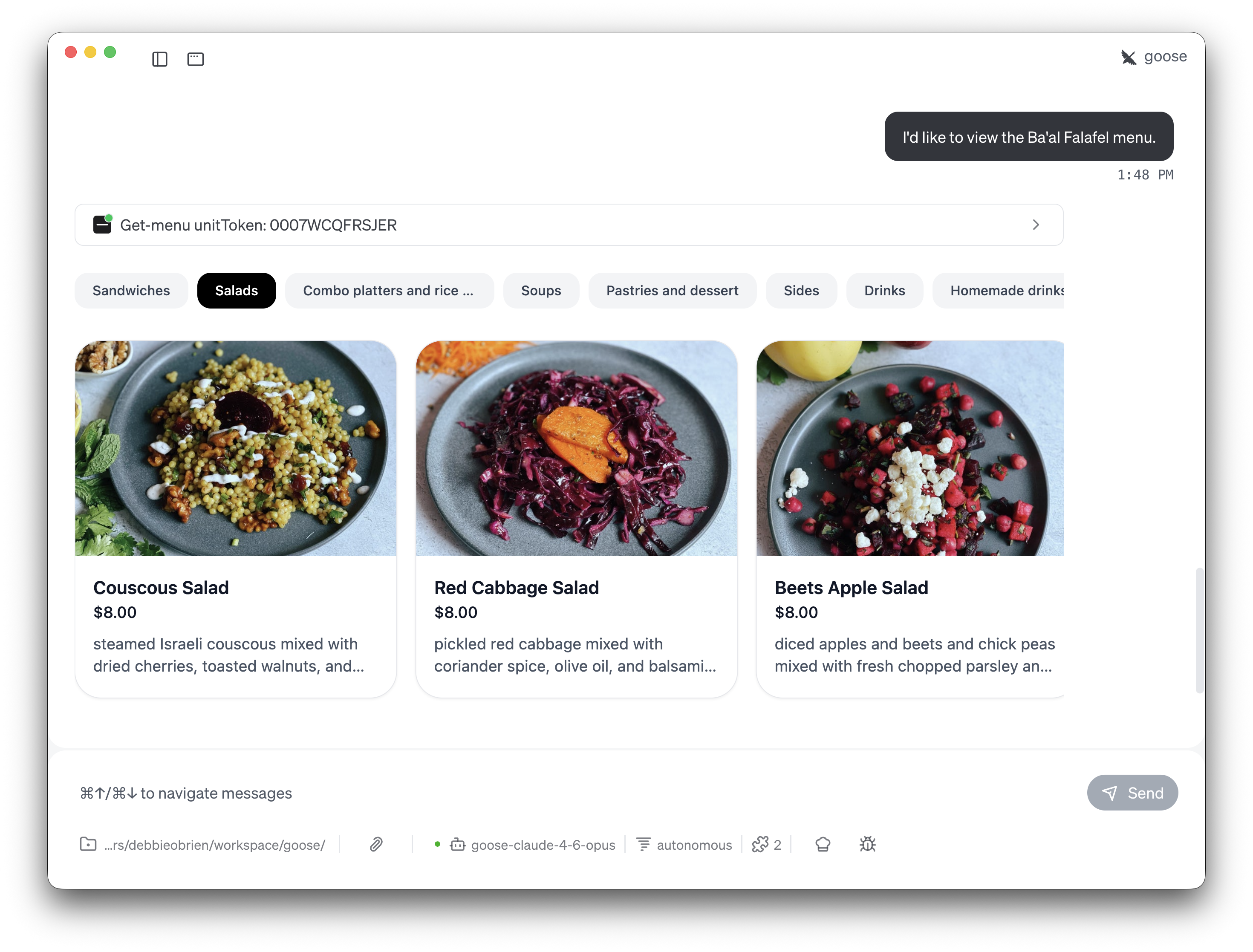
Ba'al Falafel salads menu in goose showing Couscous Salad, Red Cabbage Salad, and Beets Apple Salad with photos and prices

If you're anything like me, deciding what to eat for lunch is harder than it should be. Now add dietary restrictions on top of that (I'm coeliac so have to eat gluten-free) and suddenly finding a restaurant becomes a whole research project. Searching menus, cross-referencing reviews, checking if that one sandwich actually has gluten in it... it's exhausting.

What if your AI agent could just handle all of that for you?

Grant Winner: Goose In A Pond

· 7 min read
Angie Jones
Head of Developer Relations

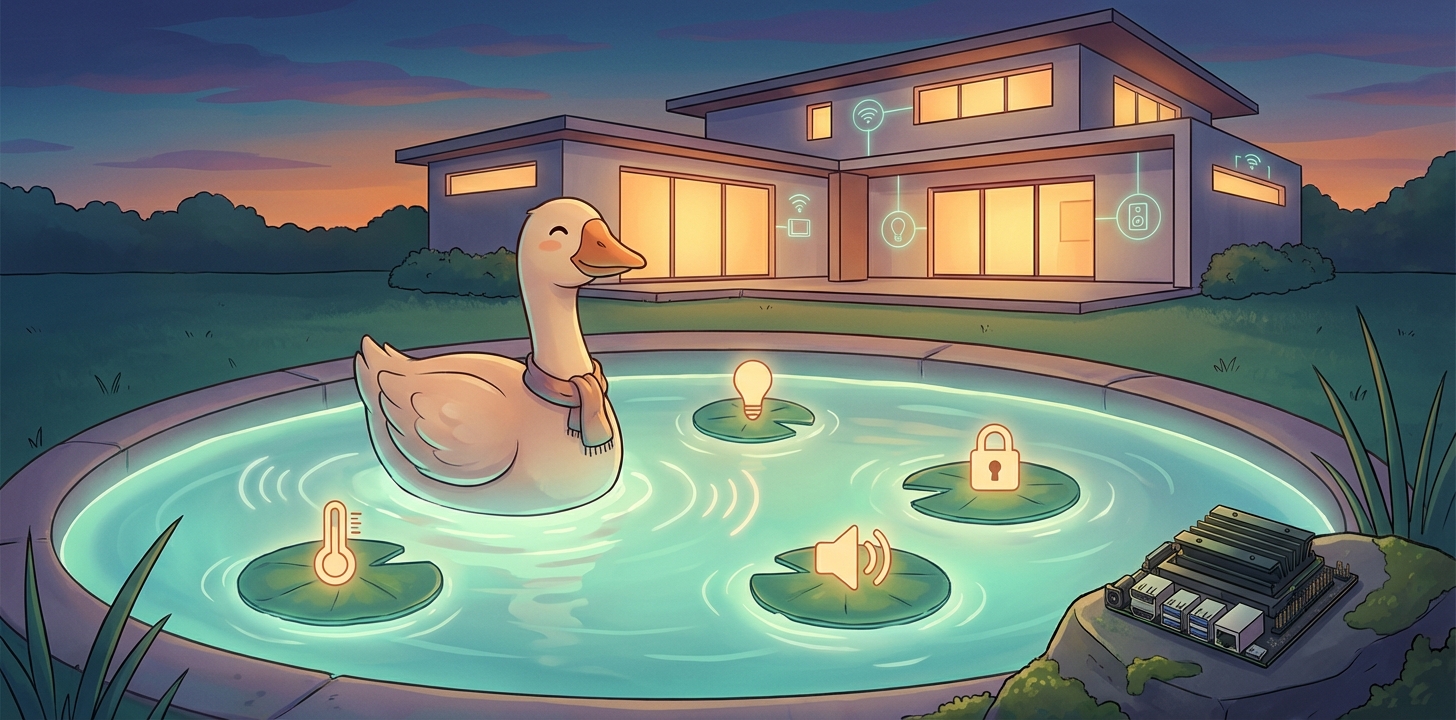
blog banner

We launched the goose grant program awarding $100K grants for developers building the future of agentic AI. We're looking for ambitious, open source projects that push goose into new territory, and today, We're thrilled to introduce one of our grant recipients: Goose In A Pond, a project that's taking goose off the desktop and into your home.

goose v1.25.0: Sandboxed, Streamlined, and More Secure

· 8 min read
Debbie O'Brien
Staff Developer Advocate

Banner image for the goose v1.25.0 release

goose v1.25.0 is here, and it's one of our most significant releases yet. This version brings macOS sandboxing for enhanced security, a major architectural simplification with the unified summon extension, rich UI rendering for MCP apps, and a wave of improvements to agentic CLI providers. Whether you're running goose Desktop or the CLI, there's something in this release for you.

Let's break down what's new.

Gas Town Explained: How to Use Goosetown for Parallel Agentic Engineering

· 8 min read
Rizel Scarlett
Staff Developer Advocate
Tyler Longwell
Security Operations Engineer

Goosetown

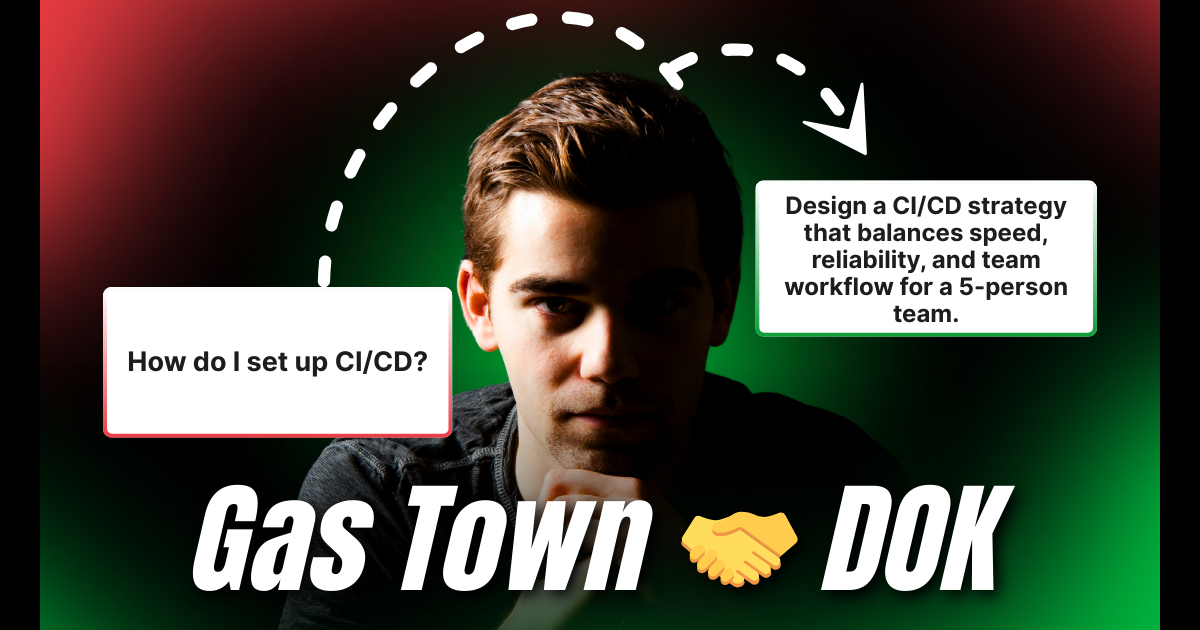
On New Year's Day 2026, while many were recovering from the night before, a different kind of hangover took hold of every AI-pilled, chronically online software engineer. Steve Yegge published a new blog post: "Welcome to Gas Town." Some walked away inspired to finally use their agents optimally; others were just plain confused. If you're like me, you felt a bit of both.

Yegge's 34 minute post is a sprawling vision filled with futuristic ideas, playful characters, and enough side tangents to make your head spin. But underneath the lore is a massive architectural shift. I want to take a step back and simplify the "Big Idea" for everyone: Gas Town is a philosophy and a proof of concept to help people coordinate multiple agents working together.

One Shot Prompting is Dead

· 6 min read
Ebony Louis
Developer Advocate

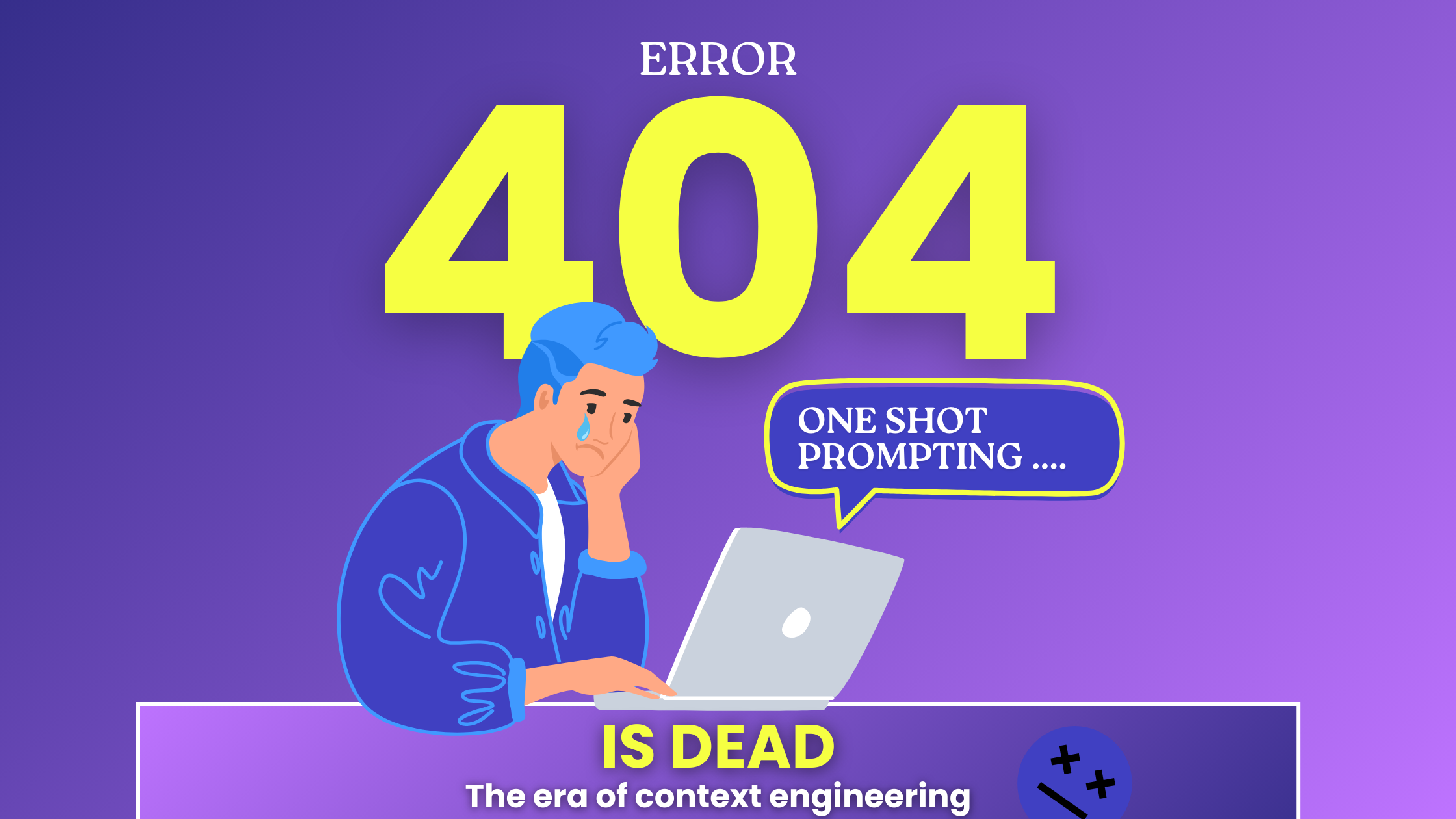
One shot prompting is dead

I attended one shot prompting’s funeral.

There were no tears. Just a room full of developers quietly pretending they weren’t taking shots the night before. Because if we’re being honest, everyone saw this coming and couldn’t be happier it was over.

Saying “one shot prompting is dead” isn’t revolutionary. It’s just catching up to what builders have been experiencing for months.

8 Things You Didn't Know About Code Mode

· 11 min read
Rizel Scarlett
Staff Developer Advocate

blog cover

Agents fundamentally changed how we program. They enable developers to move faster by disintermediating the traditional development workflow. This means less time switching between specialized tools and fewer dependencies on other teams. Now that agents can execute complicated tasks, developers face a new challenge: using them effectively over long sessions.

The biggest challenge is context rot. Because agents have limited memory, a session that runs too long can cause them to "forget" earlier instructions. This leads to unreliable outputs, frustration, and subtle but grave mistakes in your codebase. One promising solution is Code Mode.

Level Up Your AI Game with rp-why

· 6 min read
Dakota Fabro
Dakota Fabro
Software Engineer, Engineering Fellowship

rp-why skill banner

What is rp-why?

rp-why is your personal AI collaboration coach. It answers two critical questions:

  1. Are you using the most effective AI tools for your work?
  2. Are you asking questions that demonstrate cognitive depth?

Think of it as a fitness tracker for your AI practice—it shows you where you are, where you could be, and how to get there.

Want the theory? Check out Measuring the Cognitive Complexity of Human-AI Collaboration.

Want to use it? Keep reading.

How I Used RPI to Build an OpenClaw Alternative

· 7 min read
Rizel Scarlett
Staff Developer Advocate

How I Used RPI to Build an OpenClaw Alternative

Everyone on Tech Twitter has been buying Mac Minis, so they could run a local agentic tool called OpenClaw. OpenClaw is a messaging-based AI assistant that connects to platforms such as Discord and Telegram allowing you to interact with an AI agent through DMs or @mentions. Under the hood, it uses an agent called Pi to execute tasks, browse the web, write code, and more.

Seeing the hype made me want to get my hands dirty. I wanted to see if I could build a lite version for myself. I wanted something minimal that used goose as the engine instead of Pi. I tentatively dubbed it AltOpenClaw.